
nutritionist near Arlington MA

3 Spring Smoothie Recipes I'm Excited to Try

Spring is finally here, and what better way to celebrate the season than with refreshing and delicious smoothies! Here are five smoothie recipes that I’m really excited to try, featuring flavors like cherry, cocoa, raspberries, strawberries, and peanut butter.

1. Cherry Cocoa Power Smoothie

Ingredients:

  • 1 cup frozen cherries

  • 1 tbsp unsweetened cocoa powder

  • 1/2 banana

  • 1/2 cup Greek yogurt

  • 1 cup milk of your choice

  • 1 tbsp chia seeds

  • 1 tsp sweetener of choice (optional)

Instructions:

  1. Blend all ingredients together until smooth.

  2. Pour into a glass, and enjoy!

2. Strawberry Banana Peanut Butter Smoothie with Spinach

This smoothie combines fruity sweetness with the savory richness of peanut butter. The strawberries and bananas provide classic smoothie flavors, while the peanut butter gives it a creamy texture.

Ingredients:

  • 1 cup frozen strawberries

  • 1/2 banana

  • 1 tbsp peanut butter

  • 1/2 cup spinach

  • 1 cup milk of your choice

  • 1 tbsp flax seeds (optional)

Instructions:

  1. Blend all ingredients together until smooth.

  2. Pour into a glass, and enjoy the creamy, protein-packed smoothie with a pop of green goodness!

3. Raspberry Cashew Smoothie

This creamy and satisfying raspberry cashew smoothie combines the tangy sweetness of raspberries with the rich, nutty flavor of cashews.

Ingredients:

  • 1 cup fresh or frozen raspberries

  • 1/4 cup cashews

  • 1/2 cup milk of choice

  • 1 tbsp sweetener (optional)

  • 1/2 cup Greek yogurt

Instructions:

  1. Blend all ingredients together until smooth.

  2. Pour into a glass and enjoy the creamy, fruity goodness with a nutty twist!
What to Do with Leftovers and Honor Your Fullness Cues: Creative Ideas for Enjoying Leftovers

Leftovers don’t have to be a burden. With a little creativity, you can reduce waste, enjoy your food in new ways, and honor your fullness cues.

1. Make a "Leftovers Buffet"

Take a variety of bits and pieces from different meals and create a fun, balanced plate. Mixing flavors and textures can make your leftovers feel like a new, exciting meal.

For example:

  • A little leftover pasta?

  • A few spoonfuls of salad?

  • A bite of roasted veggies?

  • Some leftover grilled chicken or tofu?

This approach allows you to enjoy a variety without finishing a large portion of one dish.

2. Repurpose Leftovers into New Dishes

Repurposing leftovers into something fresh is a great way to keep things interesting. Here are a few ideas:

  • Leftover Roasted Vegetables: Toss them into a soup or stew, blend them into a puree for a creamy soup, or stir them into a risotto or quinoa bowl.

  • Rice or Grains: Use leftover rice to make fried rice, stir it into a casserole, or mix it with sautéed vegetables and protein for a hearty grain bowl.

  • Cooked Meat or Tofu: Shred it for tacos, wraps, or sandwiches. Or, add it to a salad for a protein boost.

3. Freeze for Later

If you can't finish everything in one sitting, don’t worry—that’s what freezing is for! Portion out leftovers like soups, casseroles, pasta, or stews into smaller containers and store them in the freezer. This way, when you’re hungry again and craving it, you’ll have a ready-to-eat meal.

4. Rework Leftovers into a Smoothie or Bowl

Certain foods like fruits, veggies, and grains can be easily transformed into a delicious smoothie or bowl. Leftover fruit or roasted veggies? Blend them into a smoothie! You can add oats, chia seeds, protein powder, yogurt, and your milk of choice.

Leftover grains like quinoa or oats can be mixed with yogurt, fresh fruits, and nuts for a nutritious breakfast bowl or snack.

5. Turn Leftovers Into a Simple Salad

Salads are a fantastic way to lighten up your leftovers. Mix roasted veggies, beans, and proteins into fresh greens with a drizzle of dressing for a fresh take.

6. Compost What You Don’t Use

If you have leftovers that are no longer edible, consider composting them instead of throwing them away. Composting is an eco-friendly way to reduce waste and contribute to the environment.

The Bottom Line

With a little creativity, you can transform leftover food into new, exciting meals while honoring your fullness cues. Whether you freeze, repurpose, or compost, there are countless ways to manage leftover food in a way that’s kind to both your body and the planet.

Quick & Easy Workday Lunch: Caesar Salad Wrap with Rotisserie Chicken

When the workday gets busy and I want something satisfying, nutritious, and—most importantly—delicious, that’s where this quick and easy lunch comes in!

For today’s meal, I paired a Caesar salad kit with some convenient rotisserie chicken and wrapped it all up in a Joseph’s pita. And it took less than 5 minutes from start to finish!

Here’s how it all came together:

  1. Grab a Caesar Salad Kit: I love how these pre-packaged kits make it easy to get my vegetables without any extra prep. All the essentials are included—crunchy romaine lettuce, Caesar dressing, parmesan cheese, and croutons. It’s the perfect base for this lunch.

  2. Add Rotisserie Chicken: Rotisserie chicken is a total game-changer when it comes to quick meals. It’s already cooked, tender, and packed with flavor. I shredded a handful and tossed it straight into the wrap on top of the salad.

  3. Wrap it Up: Instead of using traditional bread, I wrapped everything in a Joseph’s pita. These pita wraps really help to hold everything together in a neat, compact way.

In less than 5 minutes, I had a balanced meal that hit all the right notes: crunchy, creamy, savory, and satisfying. Not only was it quick to prepare, but it was also packed with protein from the chicken and full of flavor and crunch.

Do you have any go-to workday lunch hacks? I’d love to hear what you’re making for lunch when you need something quick and easy!

A lot of my clients—especially fellow parents—who enter my virtual office often bring up meal planning and preparation as a major topic. Whether it's finding time to cook or staying on track with their nutrition goals, many are looking for simple, quick, and balanced meals like this one. It’s always great to share tips like this Caesar wrap to help make healthy eating more manageable during busy workdays!

Ways to Measure Progress Other Than the Scale

Weight is just one measurement of many that can be taken to indicate health. Weight is not the sole indicator of health, and measuring progress solely based on the number on the scale is not only counterproductive, but can also be mentally harmful. Too often, we become fixated on our weight, foolishly believing that this number is an accurate measure of our progress and health, and react to small fluctuations in weight that really don’t mean much. Becoming fixated on the number on the scale often leads to obsessive patterns of eating and exercising that are damaging and unhealthy.  The number we see on the scale measures one thing: our weight. It doesn’t tell us how much of our weight is made up of body fat, muscle mass, or bone destiny, and doesn’t account for changes in weight due to hormone levels or water retention. Because of this, we can't accurately assess small fluctuations we see in our weight. We don’t know if a small increase on the scale is actually a weight gain, or if it can actually be attributed to muscle gain, water retention, or hormone fluctuations. Because of this, it is important not to get too fixated on the number on the scale because it is only one of many important indicators of health. Here are some other ideas for measuring progress other than the scale. 

  1. Track healthy habits: there are many other ways to set, track, and achieve health goals that don’t relate to weight. For example, you can set a goal to drink more water, eat more fruit, or get in more joyful movement. You can then measure and track your progress in these goals on a weekly and monthly basis. This is a great way to take concrete steps towards measuring and tracking progress that don’t involve the number on the scale.

  2. Energy levels: By using intuitive eating, we get in touch with how certain food makes our bodies feel. When we eat certain foods, we may feel sluggish and tired. Our minds feel fuzzy, and our bodies feel weak and slow. Alternatively, when we consume more foods that make our bodies feel good through gentle nutrition, we feel more energized. When our brains and bodies are given proper nourishment and fuel, our energy levels soar. Paying attention to energy levels, and how our bodies respond to different patterns of eating, can be a great way to measure progress in living a healthier lifestyle. 

  3. Stress levels and mood: Mood and stress levels are another major area that are impacted by healthier lifestyle. When we are undernourished and under fueled, our neurotransmitters aren't firing optimally, which can leave us feeling irritable and low. When we begin to live a healthier lifestyle that isn’t dictated by the scale, our mood and stress levels often improve dramatically. Being aware of mood and stress can also be a great way to measure progress. 

When we are striving to live a healthier lifestyle it can be easy sometimes to get fixated on the number on the scale, and to attribute meaning to the number we see. However it is important to remember that the scale is not always accurate, and certainly does not give us an accurate picture of our overall health. It is important to focus less on the scale and more on how you feel. There are many other ways to measure progress other than the scale. The scale does not define you. 

10 Simple Ways to Lower Your Triglycerides Through Lifestyle

  1.  Work with a Registered Dietitian to guide you with gradual and sustainable weight loss.

  2. Enjoy the “Whole-y” grain! Choose whole grain bread, pasta, and rice instead of white bread, rice, and pasta. Limit foods and beverages that are high in sugar.

  3. Emphasize unsweetened beverages – water, tea, seltzer, coffee (without cream and sugar), instead of regular soda, sweetened tea, and coffee.

  4. Increase nut intake namely almonds, pecans, walnuts, cashews, pistachios.

  5. Eat throughout the day - don’t go too long without eating.

  6. Drink and eat fat-free (skim) or low-fat dairy products. Consider mixing skim with 1% if you prefer not drinking skim alone.

  7. Engage in moderate-intense physical activity for 30 minutes per day on most days of the week or a total of 150 minutes per week – Lets find a routine that works for YOU!

  8. Increase unsaturated fat intake (olive oil, nuts, avocados, vegetable oils, and fatty fish). Increase nut intake namely almonds, pecans, walnuts, cashews, pistachios.

  9. Eat fatty fish twice per week (fatty fish includes: salmon, sardines, tuna and mackerel to name a few).

  10. Choose mostly plant-based protein or lean meats (chicken without skin, fish, lean beef, pork, veal) instead of bacon, hot dogs, or sausage.

    For a more personalized nutrition and lifestyle plan, book an appointment here.  

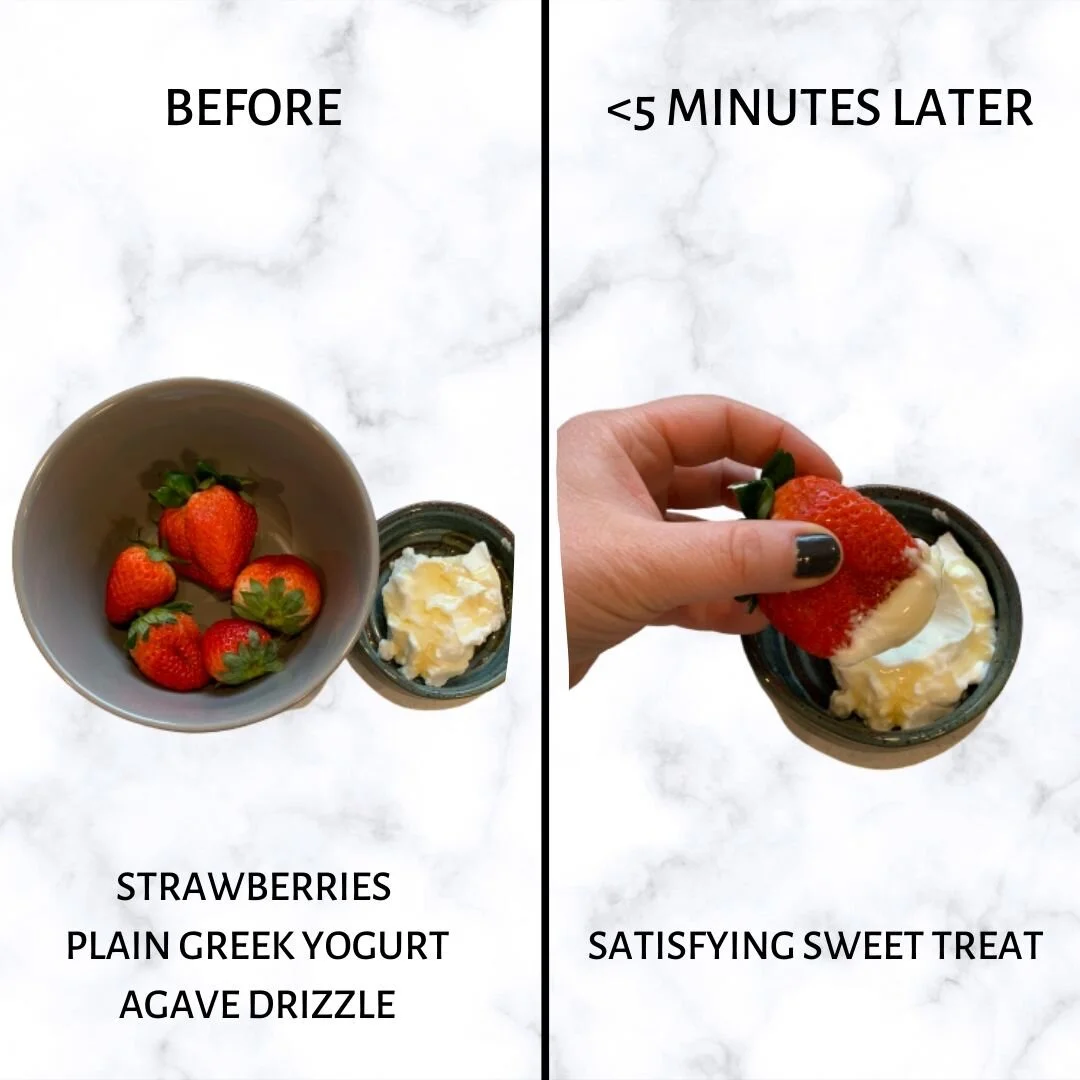
Deliciously Sweet (And Healthy) After-dinner Treat!  

What are your favorite after dinner sweet treats? Let me know in the comments.
Spoiler alert - planning healthy meals and snacks does NOT have to be time consuming or complicated! 

This simple combo takes less than 5 minutes to throw together AND checks the satisfaction box!

Here’s what to do:

1) Rinse a bowl of strawberries (stem on).
2) Drizzle agave on top of plain Greek yogurt.
3) Dip the strawberries into the Greek yogurt mixture and enjoy a flavorful and healthy after dinner treat!

intuitive eating coach snacking